Information and specifications in:
Esquivias Dominguito bass: Eluno
In loving memory of my father, Domingo.
For some time now I had been thinking about building a bass guitar and seeing what sensations would come over me. It would be and it is already the first bass guitar. Yes.
And I wanted to think it through before shooting the first line of his figure with my crayon.
When I finally had the body shaped and the template ready to start with.... Wow. I don't think so. On second thought... no. Like this, I don't think it would work.
I went over everything again, studied thoroughly and identified and classified better those differences that are as subtle, invisible and quiet as they are critical, blatant and decisive. The ones that have a guitar versus a bass guitar and that either drive you to a certain rough and flat ignorance or push you to that particular delicious intimate satisfaction.

Done. There was no need for the definitive one.
There's no hiding that it is somewhat in the giddy style of the Haba model. But it well develops my own style purposefully and placates that irrational sense that sometimes fires me up.


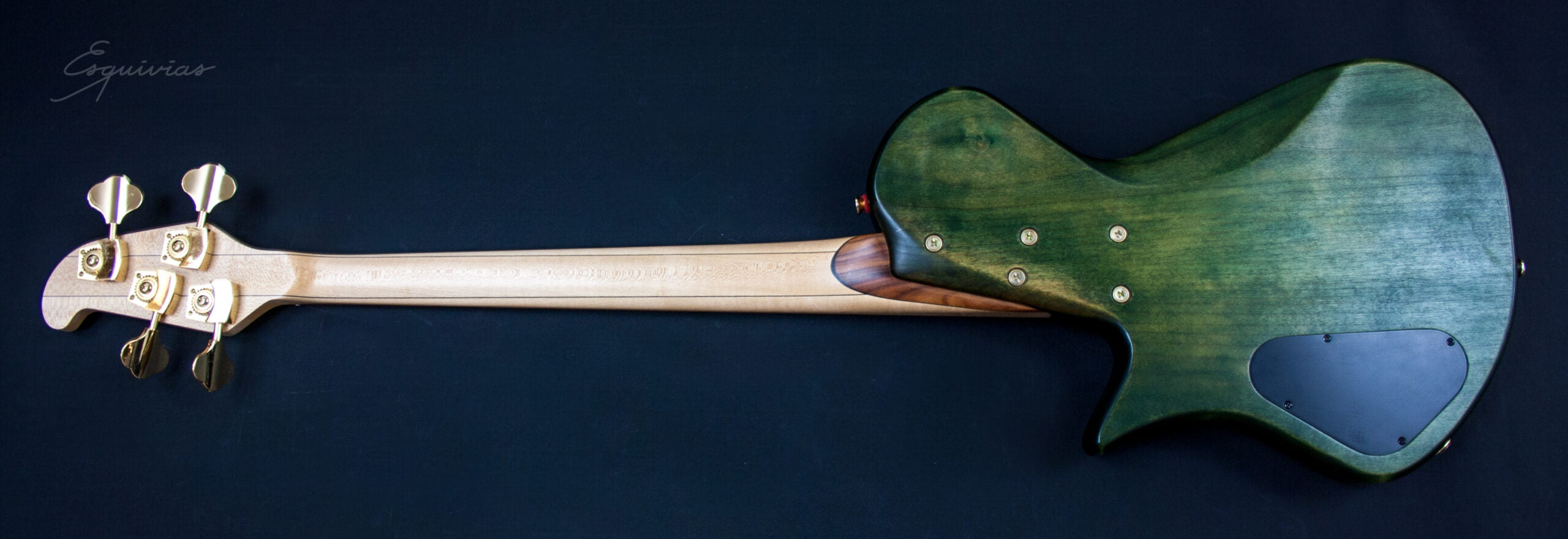
So, without further consideration, I saw the beautiful veneer of the alder timber that I had been storing for some special purpose and I chose it for the body. After placing the template to the axis and opening the curves with the saw and the blade, I made its splendid glittering body to appear disposed. Done.

And the neck, my precious friend?

Wonderful. It was Spanish oak, it was from a 30+ year old plank, it was dry as a bone, it was a three-piece laminate and it was stained green. However, this is not the neck it actually has. And if you are really interested and concerned about this, let me know and I will be happy to explain it to you.
The neck that I have re-carved and which the bass carries is a three-piece laminate and black maple inner joint veneer, it is very dry, it is from a board that is more than three years old, it is made of beautiful European maple and exotic pao ferro on the fingerboard that also decorates and beautifies its heel. A comfortable and soft neck, a thin and slender carving, thinning to flat in the centre. Very stiff, reliable and very beautiful overall.

The electronics, although it works in surprise, has two excellent pickups in the classic style used in Mr. Leo's Bass of Jazz Leo , each one connected to two potentiometers with the intention of controlling them. And a third blender- blender type potentiometer for mixing the bridge and neck pickup. The possibility of surprising changes in sound and tone is guaranteed. It opens up a wide spectrum of sonorities where it asks you to play with the volume, so it's worth it if you don't mind the adventure.

A comfortable action awaits us because the string height allows for a sufficiently low setting with no fretting and retaining an appreciable sustain. It's responsive, as consistent if it's slap as subtle if expressiveness is needed. This is the first and, as it has brought me suffering and enjoyment, it will certainly not be the last Esquivias Dominguito bass.

